-
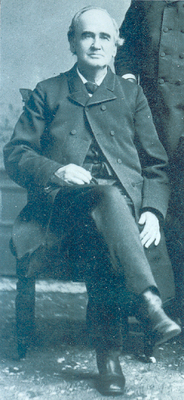 Dr. Giles Paddock Ransom Family Collection, RC 275, Box 30, Folder 2
-
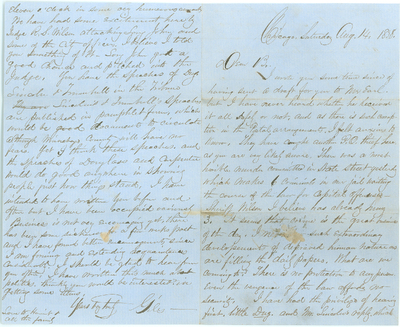 Dr. Giles Paddock Ransom Family Collection, RC 275, Box 12, Folder 2
 Dr. Giles P. Ransom, a physician from Winnebago County, wrote to his brother Erasmus Darwin Ransom about attending the speeches delivered by Stephen A. Douglas and Abraham Lincoln in Chicago. Both Lincoln and Douglas were running for the United States Senate. The speeches were given shortly before the famous Lincoln-Douglas debates, held in seven of the nine congressional districts in Illinois. Dr. Ransom describes how impressed he was with Lincoln’s communication skills:
I have had the privilege of hearing first little Dug. and Mr. Lincoln’s reply… Abe Lincoln is a great man, having had only 24 hours to prepare to reply to the speech of Douglas which was, without doubt, a well and carefully prepared speech. Lincoln completely dissected and riddled Douglas…
Dr. Ransom notes that he stood near a Douglas supporter who, when listening to Lincoln’s reply, was amazed by the address: “I declare I never heard anything answered like that.”
-
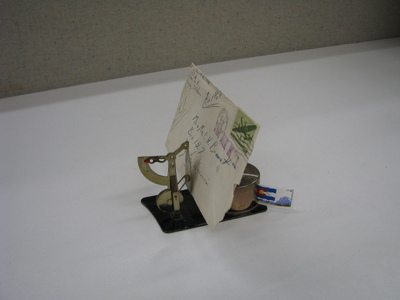 Letter scale and stamp dispenser courtesy of Cindy Ditzler
-
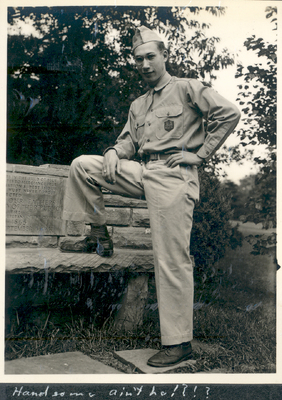 Photo courtesy of Jack Bennett
-
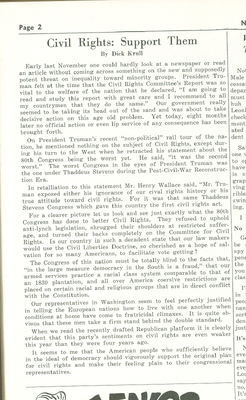 Civil Rights: Support Them
-
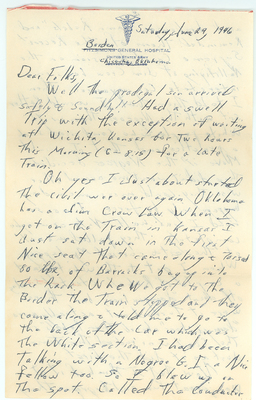 Faculty Papers, UA 18--Jack Bennett, Box 7, Folder 4
 Jack Bennett, later a professor of biology at Northern Illinois University, wrote home to his parents while staying on an army base in Chicasha, Oklahoma. He describes his frustration when encountering the reverse enforcement of Jim Crow Laws while traveling to the base. The train conductor asked him to move from the black to the white seating. Mr. Bennett informs the conductor that this would only be possible by force.
Oh yes I just about started the civil war over again. Oklahoma has a Jim Crow Law… When we got to the border the Train Stopped and they came along and told me to go to the back of the car which was the white section… So I blew up on the spot. Called the Conductor and brakeman 'Damn Rebels' and reminded them of the recent Supreme Court decision on the nullifying of Jim Crow Laws in interstate conveyances.
He is concerned that the train might be filled with “rebels” but finds that there are more “yankees” than “rebels” which helped to diffuse the situation. Mr. Bennett states that he felt he had done the proper thing in the situation: “I say ‘proper’ because if a fellow doesn’t stand up for what he thinks occasionally he takes on the character of Neville Chamberlain.” Chamberlain, British prime minister prior to Winston Churchill, was tarnished for appearing too weak with the Nazi party. Bennett's reference to Chamberlain points to other current events and provides further context of his place in history.
-
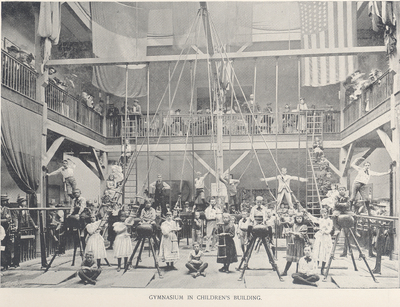 The Graphic History of the Fair: A History of the World’s Columbian Exposition
 Gymnasium in Children's Building
-
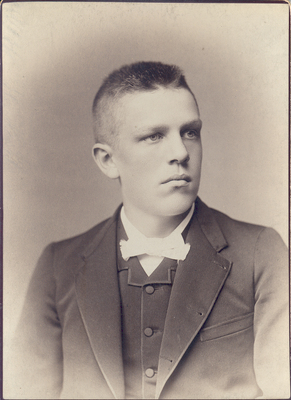 Bertha G. Bradt Collection, RC 46, Box 5
 John Glidden
-
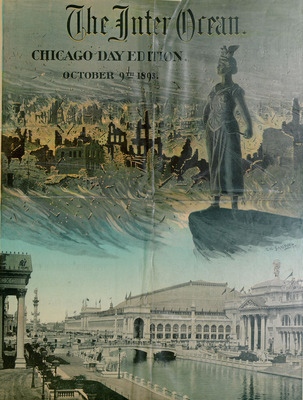 Oversize Collection, Drawer 3, Folder 6
 World's Fair Advertisement
-
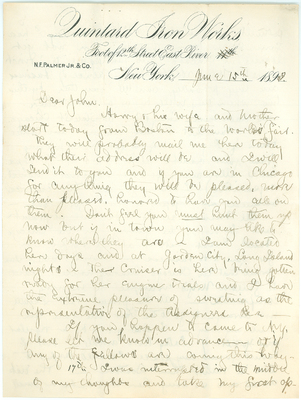 J. F. Glidden Papers, RC 6, Box 3, Folder 23
 Atherton Loring wrote a letter to John Glidden (nephew of barbed wire inventor, Joseph Glidden) informing him that his friends would be attending the 1893 World’s Columbian Exposition. Such events were very exciting for visitors and were of great significance in highlighting the latest technologies from around the world. The Chicago World’s Fair was especially important for Illinoisans and those willing to make the trip: “Harry and his wife and mother start today from Boston to the World’s Fair.” He provides Glidden the address where Harry could be reached and advices not to “hunt them down” but if he were in Chicago they would be very pleased to see him. Loring mentions that he, too, will be at the Fair later in the year. “At present rate I shall not arrange to go to the Fair till late fall…” John Glidden’s ties to the Chicago World’s Fair are greater than Loring's mention of it in this letter; a few years later he marries Mable Carter who helped decorate the Children’s Building located at the Exposition. Carter was a pupil at the Chicago Art Institute.
